

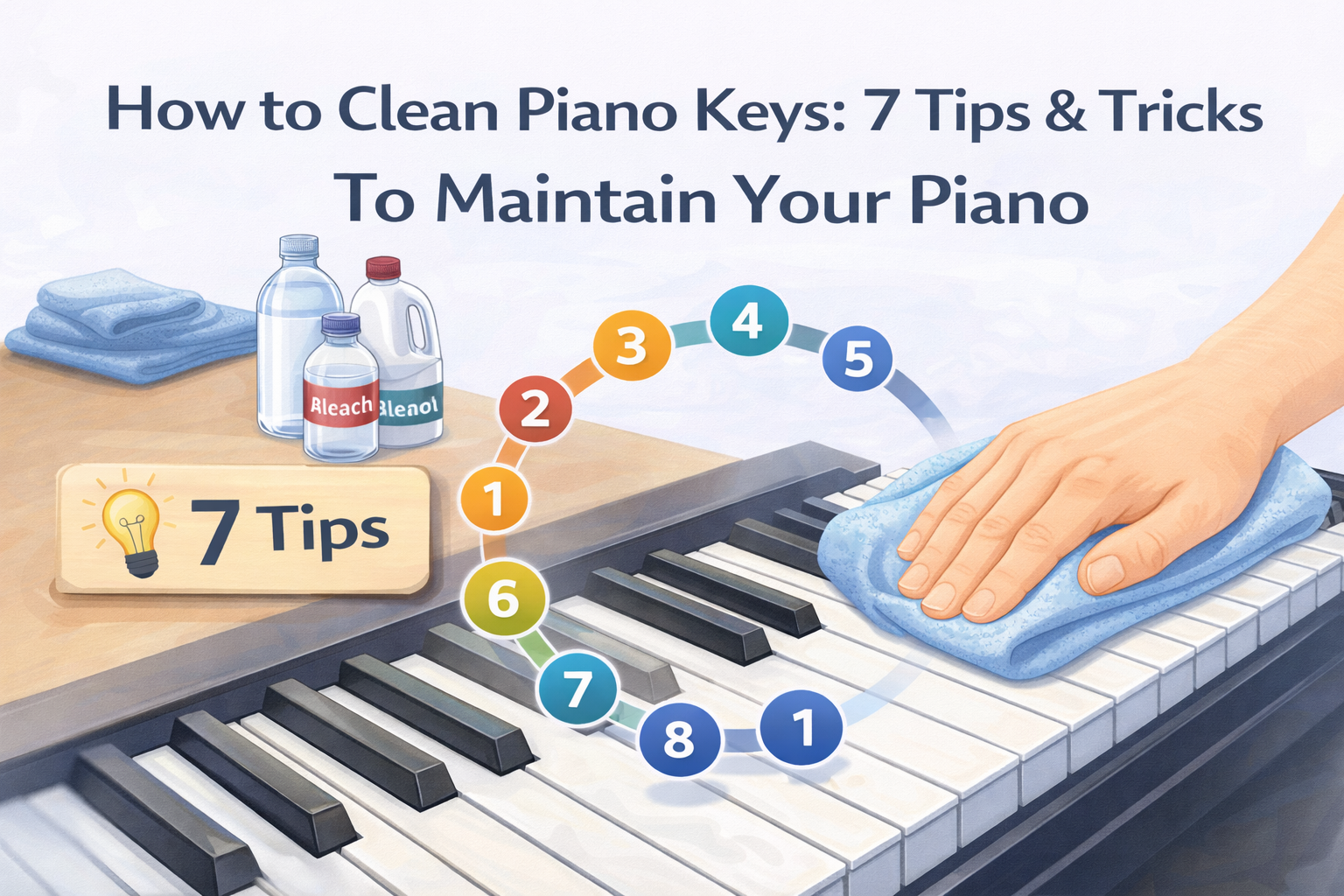
Keeping your piano clean isn’t just about appearance; it’s about protecting your instrument’s performance, longevity, and hygiene. Piano keys collect oils, dust, sweat, and bacteria over time, and improper cleaning can cause permanent damage.
This guide walks you through 7 safe, professional-approved tips to clean piano keys correctly whether you’re a beginner, a parent, or a regular player.
Before You Clean – Important Safety Precautions
Before touching a cloth or cleaner, it’s essential to understand what kind of keys your piano has and what not to do.
Identify Your Piano Key Type
- Modern pianos: Plastic (acrylic) keys
- Older pianos: Ivory keys (rare but delicate)
⚠️ Ivory reacts very differently to moisture and chemicals, so extreme care is required.
Why Using the Wrong Cleaner Is Dangerous
Household cleaners can:
- Strip key surfaces
- Cause discoloration
- Allow moisture to seep inside the piano
Damage Insight:
Piano technicians report that over 60% of cosmetic key damage comes from improper DIY cleaning methods.
Tools You Need to Clean Piano Keys Safely
Using the right tools is more important than cleaning often.
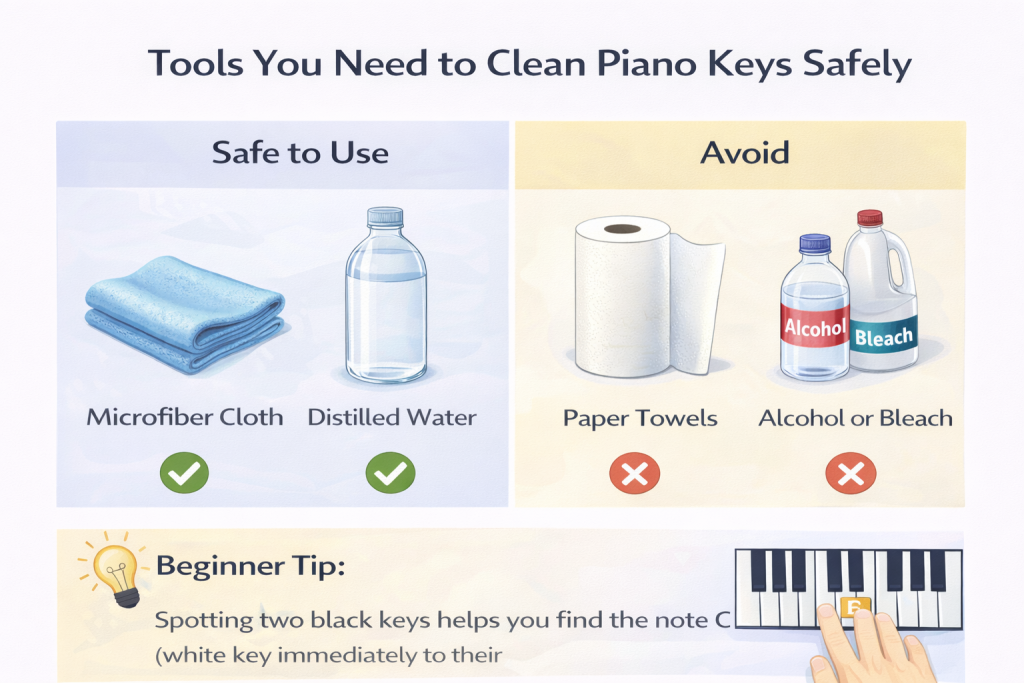
Recommended Tools vs What to Avoid
| Item | Safe to Use | Reason |
|---|---|---|
| Microfiber cloth | ✅ | Non-scratch, absorbent |
| Distilled water | ✅ | No mineral residue |
| Mild dish soap (very diluted) | ⚠️ | Only if necessary |
| Paper towels | ❌ | Can scratch keys |
| Alcohol or bleach | ❌ | Causes discoloration |
| Vinegar | ❌ | Damages key surfaces |
Tip #1 – Wash and Dry Your Hands First
This is the most overlooked yet effective habit for piano care.
- Finger oils cause yellowing
- Sweat breaks down key surfaces
- Dirt transfers instantly to keys
Stat:
Players who wash their hands before practice reduce visible key discoloration by up to 40% over time.
Tip #2 – Use a Slightly Damp Cloth (Never Wet)
When cleaning piano keys:
- Lightly dampen the cloth (not dripping)
- Wipe front to back, never side to side
- Avoid letting moisture drip between keys
Think “gentle wipe,” not “scrub.”
Tip #3 – Clean White and Black Keys Separately
Black keys are usually made of a different material and can transfer dye if cleaned improperly.
| Key Type | Best Approach |
|---|---|
| White keys | Light damp wipe |
| Black keys | Extra gentle + dry immediately |
✔ Clean white keys first
✔ Let dry
✔ Then clean black keys
Tip #4 – Dry Keys Immediately After Cleaning
Never let keys air-dry.
Why This Matters
- Moisture can seep under keys
- Internal wooden parts may swell
- Key action can become sluggish
Tip #5 – How Often Should You Clean Piano Keys?
Cleaning frequency depends on how often the piano is used.
| Usage Type | Recommended Cleaning |
|---|---|
| Daily practice | Weekly |
| Occasional playing | Monthly |
| Teaching studios | Weekly or biweekly |
🎹 If you’re taking regular lessons or practicing consistently, as students guided by experienced piano professionals on our website.
Keeping keys clean becomes even more important for comfort and hygiene.
Tip #6 – What to Do About Stubborn Stains
If gentle cleaning doesn’t work:
❌ Do NOT use whitening products
❌ Do NOT scrub aggressively
❌ Do NOT experiment with chemicals
What You Should Do
- Stop cleaning
- Protect the keys
- Seek professional advice
If you’re unsure whether stains are cosmetic or structural, it’s best to consult a piano expert rather than risk permanent damage.
Tip #7 – Protecting Piano Keys After Cleaning
Prevention is easier than cleaning.
Smart Habits That Keep Keys Clean
- Use a keyboard cover
- Keep food and drinks away
- Maintain room humidity (40–50%)
- Close the lid when not in use
Longevity Stat:
Maintaining proper humidity and cleanliness can extend a piano’s lifespan by 20–30%.
Common Piano Cleaning Mistakes to Avoid
❌ Spraying liquid directly on keys
❌ Using disinfectant wipes
❌ Scrubbing stains aggressively
❌ Cleaning without drying
When to Call a Professional
You should seek expert help if:
- Keys feel sticky or uneven
- Discoloration worsens
- Keys stop responding properly
- The piano hasn’t been serviced in years
In these cases, reaching out through a professional piano contact page like
can save you time, money, and long-term damage.
Final Thoughts
Cleaning piano keys properly is about gentle care, consistency, and knowing when to stop. With the right tools and habits, you can keep your piano in optimal condition, responsive, and beautiful for years.
Treat your piano like the instrument it is, not furniture, and it will reward you every time you play.