
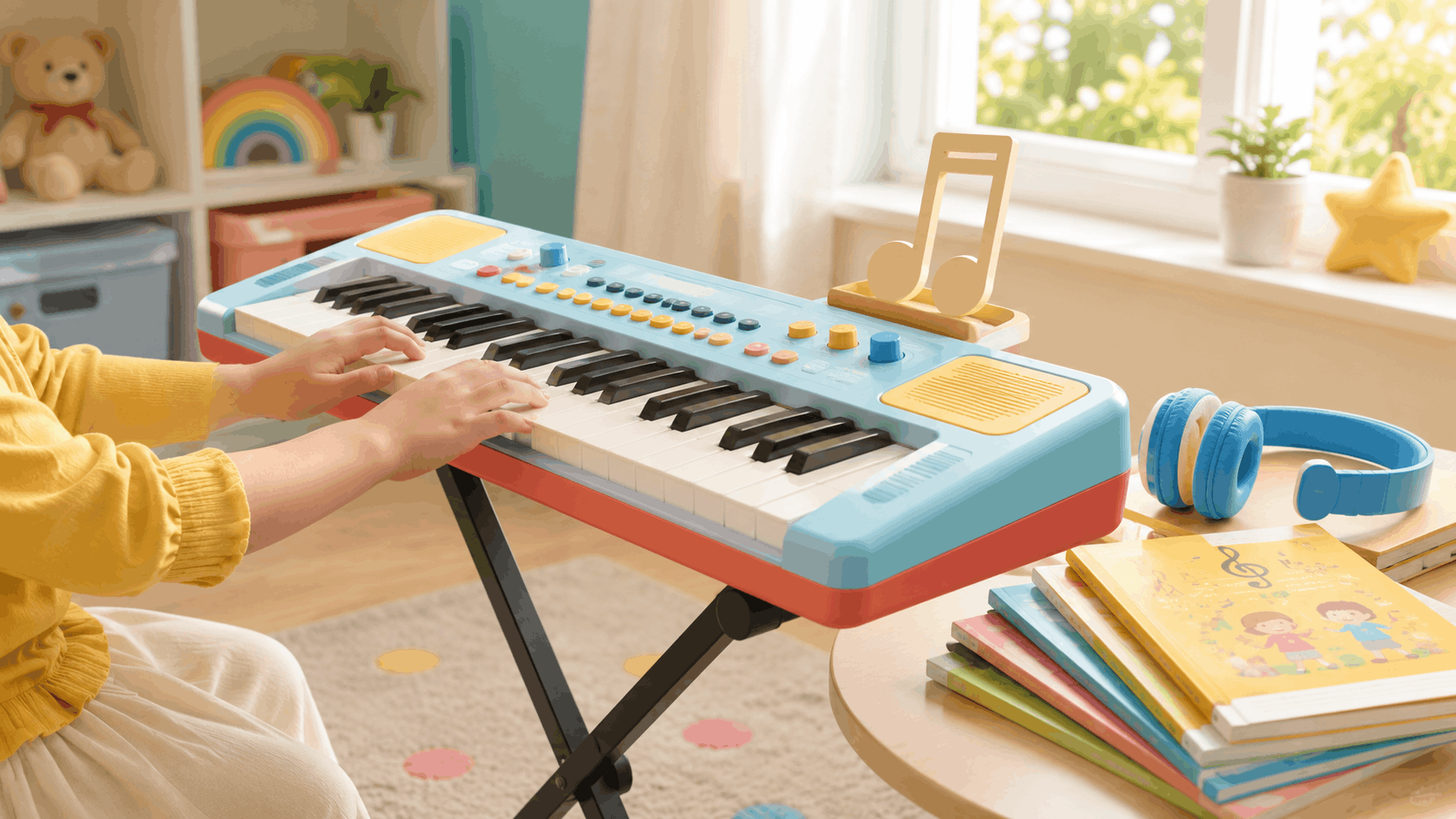
Choosing the right piano keyboard for a child isn’t just about picking the cheapest option on Amazon or the one with the most flashing lights. The right instrument depends on your child’s age, hand size, how serious their interest is, and whether they’re heading toward formal lessons. This guide breaks down the 10 best children’s piano keyboards for 2026, organized by age group and budget, plus a full buying guide covering everything most other reviews skip — battery life, weighted vs. unweighted keys, portability, and how many keys your child actually needs.
Quick Comparison Table
| Keyboard | Best For (Age) | Keys | Weighted? | Price Tier | Best Feature |
|---|---|---|---|---|---|
| Alesis Melody 32 | 3–6 | 32 mini keys | No | Budget | Lights, headphones included |
| Casio SA-76/SA-81 | 4–8 | 44 mini keys | No | Budget | Portable, battery-powered |
| Korg TinyPiano | 3–6 | 25 keys | No | Budget | Mini upright piano design |
| Casio CT-S300 | 6–10 | 61 keys | No | Budget-Mid | Dance Music Mode, app support |
| Yamaha PSR-E360 | 7–12 | 61 keys | Semi | Mid | Wood-finish options, rich tones |
| Casio CT-X700 | 7–11 | 61 keys | No | Mid | AiX sound engine realism |
| Roland GO:KEYS 3 | 7–12 | 61 keys | No | Mid | Chord sequencer, portability |
| Yamaha Piaggero NP-15 | 10+ | 61 keys | No | Mid-High | Realistic grand piano tone |
| Alesis Recital Pro | 8+ | 88 keys | Yes | Mid-High | Full-size weighted action |
| Kawai ES60 | 10+ | 88 keys | Yes | Premium | Responsive Hammer Lite action |
How to Choose: The 3 Questions That Matter Most
Before comparing individual keyboards, answer these three questions:
- How old is your child? Younger children (3–6) need smaller, lighter instruments with less key resistance. Children 7+ can typically handle full-size, standard keys.
- How serious is the interest? A child casually curious about music can start on a modest 32–44 key keyboard. A child already enrolled in lessons will likely need a full-size, weighted 61–88 key instrument, since teachers generally require it for proper technique.
- What’s the budget, and will they outgrow it? Entry keyboards under $100 are great for testing interest but are usually outgrown within a year or two. Mid-range and weighted options last significantly longer.
Best Piano Keyboards by Age Group
Ages 3–6: Fun, Lightweight, Exploration-Focused
At this age, the goal isn’t technique — it’s curiosity and cause-and-effect play. Mini keys, bright colors, and built-in songs matter more than realism.
1. Alesis Melody 32
A 32-mini-key keyboard designed purely for fun-first exploration. It includes a wide variety of sounds and rhythms, built-in lessons, and headphones for quiet practice. Excellent starter gift for kids ages 4–6 who are just discovering music.
2. Korg TinyPiano
Shaped like a miniature upright piano, this 25-key keyboard is built to capture a toddler’s imagination rather than mimic a real learning instrument. It comes preloaded with dozens of sounds and demo songs and has a built-in speaker for independent play.
3. Casio SA-76 / SA-81
A lightweight, battery-powered mini keyboard (44 keys) that’s genuinely portable — it can go in a backpack, to grandma’s house, or on a road trip. Higher-end versions in this line add sampled instrument tones and layering modes, giving young kids a surprisingly rich sound for the size.
Ages 7–11: Building Real Technique
This is the age range where many kids start formal lessons. A full 61-key layout, better sound sampling, and basic learning tools (metronome, lesson mode) start to matter.
4. Casio CT-S300
A lightweight, full 61-key portable keyboard with a built-in carry handle, dual/split sound modes, and a companion app. A well-rounded option for kids beginning structured practice without a big investment.
5. Casio CT-X700
Steps up in sound quality with a more advanced sound engine that gives piano, synth, and orchestral tones a noticeably more realistic feel than entry-level models. A strong middle-ground pick if you want your child to have “big kid” sound without full digital-piano pricing.
6. Yamaha PSR-E360
Available in wood-finish styling, this 61-key keyboard offers a richer tone library and more polished construction than most beginner keyboards, while remaining lightweight enough for a child’s room.
7. Roland GO:KEYS 3
A 61-key keyboard built around creative tools — auto-accompaniment and a chord sequencer let kids build full-sounding songs without needing music theory yet. It’s very lightweight and battery-capable, making it easy to move between rooms or take outside. Keys are unweighted, so it suits creative play more than formal technique-building.
Ages 12+ and Serious Beginners: Real Piano Feel
Once a child is committed to lessons, most teachers recommend moving to a full 88-key, weighted (or semi-weighted) instrument that mimics an acoustic piano’s touch.
8. Yamaha Piaggero NP-15
A 61-key keyboard that looks and sounds closer to a “grown-up” instrument while still being accessible for younger players moving beyond toy keyboards.
9. Alesis Recital Pro
A full 88-key digital piano with genuinely weighted key action that mimics an acoustic piano’s resistance — a strong pick for kids who need to build correct finger strength and technique for exams or continued lessons.
10. Kawai ES60
A premium pick with Responsive Hammer Lite weighted action, offering some of the most realistic key feedback available at this level, plus quiet, cushioned keypresses. A strong long-term investment for a child serious about formal piano study.
Weighted vs. Unweighted Keys: What’s the Difference?
| Type | What It Feels Like | Best For |
|---|---|---|
| Unweighted / synth-action | Light, springy, easy to press | Young kids (3–8), casual play, portability |
| Semi-weighted | Some resistance, more piano-like | Kids 7–11 transitioning into lessons |
| Fully weighted (hammer action) | Mimics an acoustic piano’s touch and resistance | Kids 8+ in formal lessons, exam preparation |
Unweighted keyboards are gentler on developing hand strength and cheaper to produce, which is why almost all budget kids’ keyboards use them. However, if a child is being trained for technique (proper finger independence, dynamics, and exam-level playing), a semi-weighted or fully weighted instrument becomes important sooner rather than later.
How Many Keys Does My Child Actually Need?
| Key Count | Good For |
|---|---|
| 25–32 keys | Toddlers and preschoolers exploring cause-and-effect play |
| 44–49 keys | Young beginners (ages 4–8) not yet playing two-handed pieces |
| 61 keys | Most beginner and intermediate learners — covers the vast majority of beginner sheet music |
| 76–88 keys | Intermediate to advanced students, formal lessons, exam repertoire |
A 61-key keyboard is generally considered the sweet spot for kids old enough for two-handed playing, since it covers nearly all beginner and early-intermediate piano repertoire.
Battery, Portability & Practical Considerations (Often Overlooked)
- Battery-powered options (commonly running on 4–6 AA batteries) are worth prioritizing for younger children — they allow play during power outages, travel, or in rooms without easy outlet access.
- Weight matters more than you’d think. Lightweight keyboards (under 5–6 lbs) let kids move the instrument themselves, which can boost independent practice.
- Headphone jacks are one of the most under-appreciated features — they let kids practice without disrupting the rest of the household.
- Stands and benches aren’t always included. If a keyboard doesn’t come with one, factor in a separate stand and adjustable bench for proper posture, especially for kids under 8.
Safety and Durability Notes for Parents
- Look for solid construction (some models use MDF wood cabinets rather than thin plastic) if the keyboard will see daily, enthusiastic use.
- Battery-operated toddler keyboards (ages 1–3) should have a secured battery compartment, since young children may try to open it.
- For kids under 3, keyboards with simple cause-and-effect features (light-up keys, minimal buttons) tend to hold attention longer than feature-dense models designed for older kids.
Toy Keyboard vs. Real Digital Piano: How to Decide
| If your child… | Choose a… |
|---|---|
| Is casually curious, under age 6 | Toy-style mini keyboard (25–44 keys) |
| Is starting lessons but not committed long-term | Mid-range 61-key portable keyboard |
| Is enrolled in structured lessons with a teacher | Weighted 61–88 key digital piano |
| Is preparing for exams or long-term serious study | Fully weighted 88-key digital piano or acoustic piano |
FAQs
Do kids need weighted keys to start learning piano?
Not necessarily at the very beginning. Many teachers are fine with unweighted keyboards for the first months of exploration, but recommend switching to a weighted instrument once formal technique training begins — usually within the first year of lessons.
What’s the minimum number of keys for two-handed playing?
Most teachers recommend at least 49 keys (four octaves) once a child starts playing with both hands, though 61 keys gives more headroom and covers virtually all beginner repertoire.
How long will a beginner keyboard last before my child outgrows it?
Entry-level keyboards typically serve a child well for 12–24 months of casual to early-intermediate learning before a fully weighted instrument becomes necessary for continued technical growth.
Is a acoustic piano better than a digital keyboard for kids?
Acoustic pianos offer authentic touch and resonance but are expensive, immovable, and harder to maintain (tuning costs). For most families starting out, a quality weighted digital piano offers a comparable learning foundation at a fraction of the cost and space.
Do I need to buy a stand, bench, or headphones separately?
Often, yes — many keyboards (especially budget models) don’t include a stand or bench. Check the product listing carefully, and budget for these accessories if they’re not bundled in.
Final Recommendation
- Best overall for most families: Casio CT-X700 — strong sound quality and features without full digital-piano pricing.
- Best for toddlers (ages 3–6): Alesis Melody 32 or Korg TinyPiano.
- Best for kids starting formal lessons: Alesis Recital Pro — genuine weighted action at a comparatively accessible price.
- Best premium long-term investment: Kawai ES60 — realistic touch that will support a child well into intermediate and advanced study.
Whichever keyboard you choose, prioritize matching the instrument to your child’s current stage rather than buying the most advanced option upfront — a keyboard that feels fun and approachable today is far more likely to build a lasting love of music than one designed to be “grown into.”