
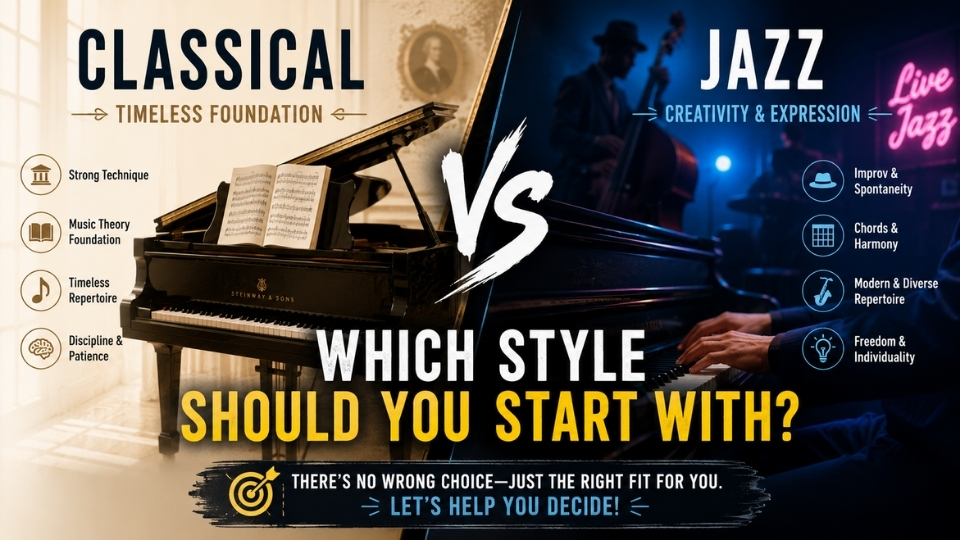
If you’re new to piano, one of the first questions you might ask is: “Should I start with classical vs jazz piano?” Both styles have their charm, challenges, and learning paths. Understanding the differences between classical piano vs jazz piano will help you decide which style fits your goals, personality, and musical taste. For guidance and expert lessons in either style, you can visit Glasgow Piano Tuition to explore courses and resources.
In this article, we’ll explore Classical vs Jazz Piano, discuss the benefits of each, and provide tips for beginners choosing their first style.
Table of Contents
Understanding Classical Piano
Classical piano is the foundation of traditional music training. It focuses on structured compositions, precise technique, and musical interpretation.
Key Features of Classical Piano:
- Structured Learning: Classical piano follows a structured approach, with emphasis on reading sheet music and mastering finger techniques.
- Composers & Pieces: Popular pieces include works by Bach, Mozart, Beethoven, and Chopin. These pieces teach rhythm, melody, and harmony.
- Technical Skills: Classical training develops hand coordination, finger strength, and control over dynamics (soft and loud notes).
- Discipline: Students often practice scales, arpeggios, and etudes to build a strong technical foundation.
Benefits of Classical Piano:
- Strong Technique: Prepares your hands and fingers for advanced playing.
- Music Theory Knowledge: Learning classical pieces teaches you about harmony, chord progressions, and phrasing.
- Performance Skills: Playing classical pieces improves confidence for recitals and concerts.
Understanding Jazz Piano
Jazz piano is all about improvisation, rhythm, and personal expression. It is more flexible than classical piano and is often played with other instruments in a band.
Key Features of Jazz Piano:
- Improvisation: Jazz focuses on creating music on the spot, often using scales, chord progressions, and melodic ideas.
- Syncopation & Swing: Jazz music emphasizes rhythmic variation, syncopation, and a unique swing feel.
- Chord Extensions: Jazz uses advanced chords and harmonies like 7ths, 9ths, and 13ths.
- Creativity: Players often invent melodies and solos, freely expressing emotions.
Benefits of Jazz Piano:
- Creativity & Expression: You can explore your musical ideas without strict rules.
- Ear Training: Improvisation helps develop a strong musical ear.
- Versatility: Jazz skills make it easier to play other genres like blues, pop, and R&B.
Comparing Classical vs Jazz Piano
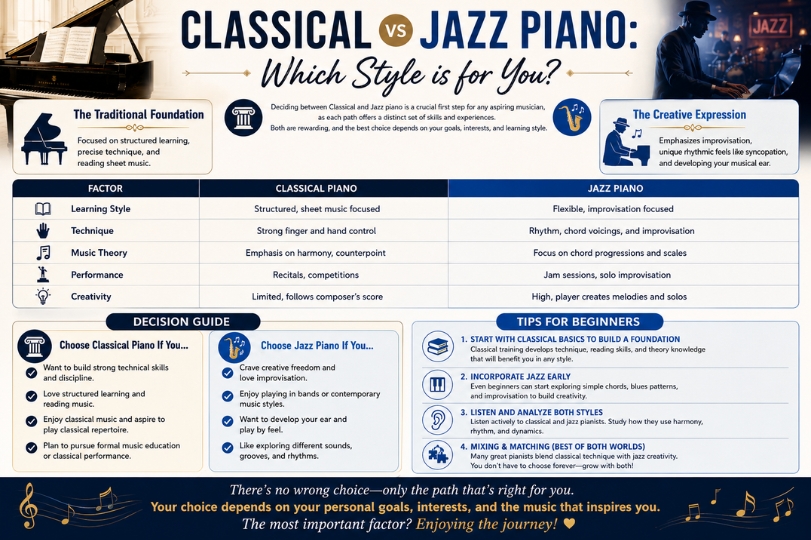
When deciding between classical piano vs jazz piano, it helps to compare the styles across several factors:
| Factor | Classical Piano | Jazz Piano |
| Learning Style | Flexible, improvisation-focused | High, the player creates melodies and solos |
| Technique | Strong finger and hand control | Rhythm, chord voicings, and improvisation |
| Music Theory | Emphasis on harmony, counterpoint | Focus on chord progressions and scales |
| Performance | Recitals, competitions | Jam sessions, solo improvisation |
| Creativity | Structured, sheet music-focused | High, player creates melodies and solos |
Jazz Piano vs Classical Piano: Which is Harder?
Both styles have challenges. Classical piano demands precision and discipline, while jazz piano requires ear training and improvisational skills. Beginners often find classical music easier to start with, but jazz can be more exciting for creative learners.
Factors to Consider Before Choosing
Here are some things to think about before picking a style:
- Your Goals: Do you want to perform structured pieces or create your own music?
- Musical Taste: Listen to both styles. Which resonates with you more?
- Learning Preference: Do you enjoy reading sheet music or experimenting with chords and improvisation?
- Future Plans: If you aim to join a jazz band or play popular music, jazz piano might be better. For solo recitals and classical repertoire, classical piano is ideal.
Tips for Beginners
If you’re still unsure, here’s how to approach learning Classical vs Jazz Piano:
- Start with Classical Basics: Even if you want to play jazz, learning classical piano first helps build technique and reading skills.
- Incorporate Jazz Early: Experiment with jazz chords and simple improvisation alongside classical lessons.
- Listen & Analyze: Spend time listening to both styles. Try playing along with recordings.
- Mix & Match: Some pianists learn both styles. For example, classical technique improves finger control, which benefits jazz improvisation.
Which Style Should You Start With?
- Choose Classical Piano if: You want strong technical skills, love structured music, or plan to perform classical compositions.
- Choose Jazz Piano if: You enjoy improvisation, want creative freedom, or plan to play in bands and explore contemporary music.
- Try Both: Many students start with classical training and then move to jazz. This combination gives the best of both worlds: technique + creativity.
Conclusion
Deciding between Classical vs Jazz Piano depends on your goals, interests, and learning style. Classical piano builds a solid foundation, while jazz piano encourages creativity and self-expression. Beginners can even combine both approaches to get strong technique and musical flexibility.
No matter which style you start with, playing the piano is a rewarding journey. Remember, the key is enjoying music while learning, and that’s the most important factor in your decision.
FAQs
Q1. Is classical piano harder than jazz piano?
Classical piano focuses on technique and sheet music, while jazz piano focuses on improvisation. Difficulty depends on personal strengths.
Q2. Can I learn jazz piano after classical?
Yes! Classical training gives a strong technique that helps in jazz improvisation.
Q3. Which style is better for beginners, jazz or classical?
Many beginners start with classical to build a foundation, then explore jazz for creativity.
Q4. Do I need music theory for jazz piano?
Basic music theory helps, especially chords and scales, but jazz emphasizes improvisation skills.
Q5. Can I mix classical and jazz piano styles?
Absolutely! Many pianists combine both to improve technique and creativity.