
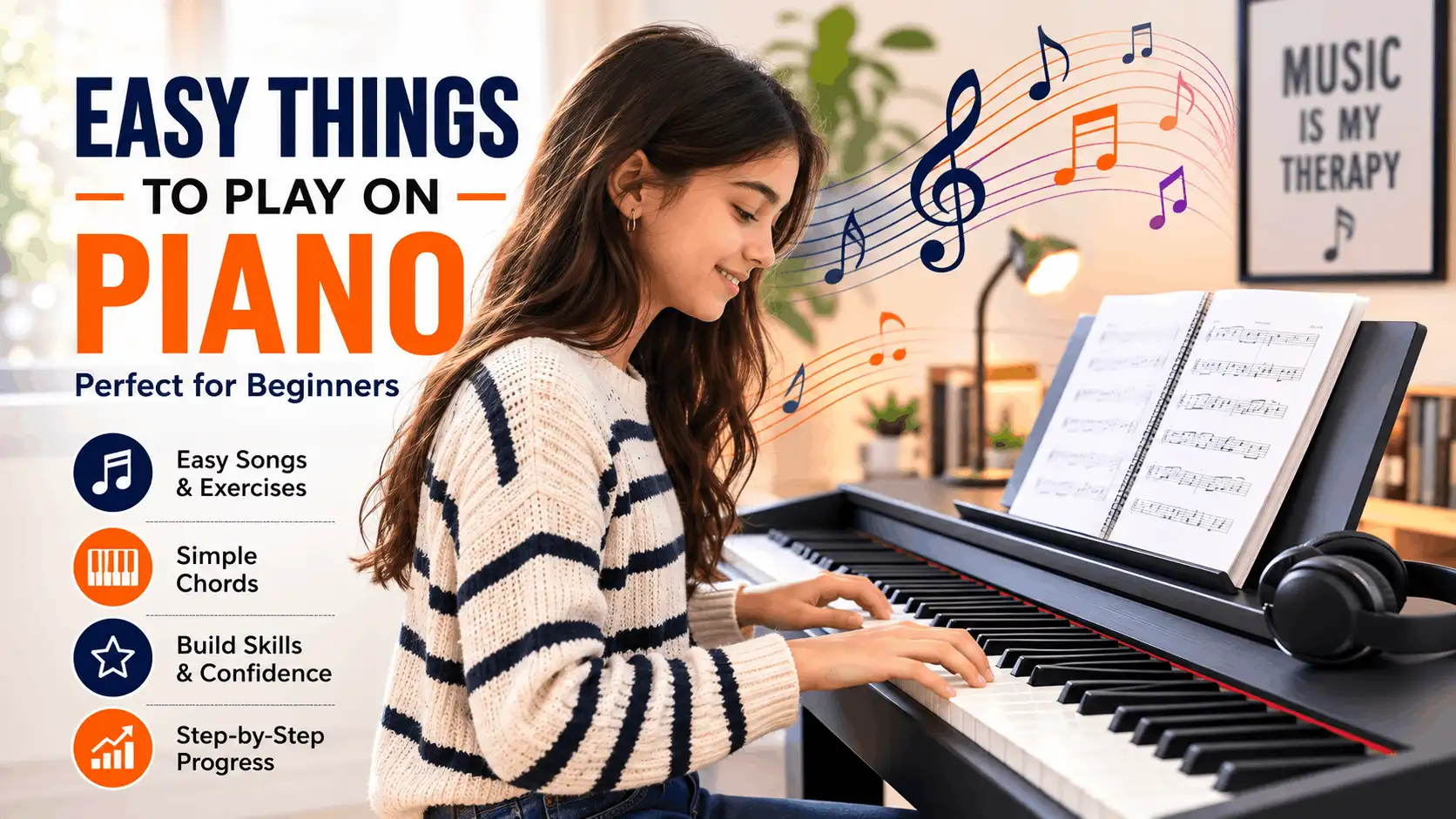
One of the biggest motivators for new piano students is being able to play something recognisable, and quickly. At Andy Piano Tuition, we always start beginners with easy, achievable pieces before moving on to more complex music. This builds confidence and keeps practice enjoyable from day one.
In this guide, we will walk through easy exercises, songs, and chords that any beginner can learn, along with tips to help you progress faster.
Why Start With Easy Piano Pieces?
Building Confidence Early
Learning something you can actually play within your first few lessons keeps motivation high. Many students who start with overly difficult pieces give up too soon. Easy pieces give you quick wins that keep you coming back to the piano.
Developing Finger Coordination and Muscle Memory
Simple exercises and songs train your fingers to move independently and accurately. This foundation makes it much easier to tackle harder pieces later on.
Easy Piano Exercises for Absolute Beginners
Five-Finger Position Exercises
Placing your hand in a five-finger position (thumb on C, pinky on G) is one of the first exercises taught at Andy Piano Tuition. It teaches finger independence without requiring you to move your hand around the keyboard.
Simple Scales (C Major, G Major)
| Scale | Notes | Difficulty |
|---|---|---|
| C Major | C, D, E, F, G, A, B, C | Easiest, no sharps or flats |
| G Major | G, A, B, C, D, E, F#, G | Slightly harder, one sharp |
Basic Chord Progressions
A simple I-IV-V progression (for example, C, F, G in the key of C major) is used in countless songs and is a great starting point for beginners.
Easy Songs to Play on Piano (By Category)
Easy Classical Pieces
- Ode to Joy (Beethoven)
- Minuet in G (Bach)
- Für Elise (simplified version)
- Canon in D (simplified version)
Easy Pop Songs
- Someone Like You (Adele)
- Let It Be (The Beatles)
- Perfect (Ed Sheeran, simplified)
- Clocks (Coldplay, simplified)
Easy Nursery Rhymes and Kids’ Songs
- Twinkle Twinkle Little Star
- Mary Had a Little Lamb
- Hot Cross Buns
- Row, Row, Row Your Boat
Easy Christmas Songs
- Jingle Bells
- We Wish You a Merry Christmas
- Silent Night
Easy Movie and TV Theme Songs
- Harry Potter Theme (simplified)
- Pirates of the Caribbean Theme (simplified)
- Star Wars Main Theme (simplified)
Easy One-Hand Piano Pieces
Many beginner songs, such as Twinkle Twinkle Little Star and Hot Cross Buns, can be played entirely with the right hand. This is a great way to build confidence before introducing the left hand.
Easy Two-Hand Piano Pieces for Beginners
Once you are comfortable with one hand, songs like Ode to Joy and simplified versions of Für Elise introduce basic left-hand accompaniment, usually in the form of single notes or simple chords.
Easy Piano Chords Every Beginner Should Know
Major Chords
| Chord | Notes |
|---|---|
| C Major | C, E, G |
| F Major | F, A, C |
| G Major | G, B, D |
Minor Chords
| Chord | Notes |
|---|---|
| A Minor | A, C, E |
| D Minor | D, F, A |
| E Minor | E, G, B |
How to Use Chords to Play Simple Songs
Once you know a handful of major and minor chords, you can play along to many simple songs using just your left hand for chords and your right hand for the melody, or by playing chord patterns alone.
How to Read Easy Piano Sheet Music
Understanding Note Names
Notes are named A through G and repeat across the keyboard in octaves. Learning to identify notes on the staff is one of the first skills taught in Andy Piano Tuition lessons.
Understanding Rhythm and Timing
Rhythm tells you how long to hold each note. Beginner pieces typically use simple rhythms such as quarter notes, half notes, and whole notes.
Simplified Sheet Music vs Full Sheet Music
Simplified sheet music removes complex rhythms, chords, and hand movements to make songs more approachable for beginners. Many popular songs have official “easy piano” arrangements available.
Tips for Learning Easy Piano Pieces Faster
- Practice hands separately before combining them
- Use a metronome to build a steady sense of timing
- Break longer songs into small, manageable sections
- Repeat difficult sections slowly before increasing speed
- Practice little and often rather than in long, infrequent sessions
- Record yourself playing to track progress over time
Common Mistakes Beginners Make When Learning Easy Pieces
- Trying to play too fast before mastering accuracy
- Skipping proper finger numbering and positioning
- Avoiding sheet music and relying only on memorisation
- Practising inconsistently rather than little and often
- Moving to harder pieces before mastering the basics
When to Move From Easy Pieces to Intermediate Piano
Most students at Andy Piano Tuition move on to intermediate pieces once they can comfortably play simple two-hand songs, read basic sheet music without hesitation, and play major and minor chords smoothly. This timeline varies from student to student, which is why personalised lessons make such a difference.
Frequently Asked Questions (FAQs)
What is the easiest song to play on piano for beginners? Twinkle Twinkle Little Star and Hot Cross Buns are widely considered among the easiest songs, as they use only a handful of notes and one hand.
Can I learn piano without reading sheet music? Yes, some beginners start by learning chords and playing by ear, though learning to read sheet music helps you progress faster and play a wider range of music.
How long does it take to learn an easy piano song? Most beginners can learn a simple song within a few practice sessions, though this depends on prior musical experience and practice consistency.
What piano chords should I learn first? C major, F major, G major, and A minor are commonly recommended as the first chords for beginners, as they appear in countless popular songs.
Do I need to learn scales before playing songs? Scales are not strictly required before playing songs, but they help build finger strength and familiarity with the keyboard, which makes learning songs easier over time.
Conclusion: Start Simple, Progress Steadily
Learning easy things to play on piano is the best way to build confidence, develop proper technique, and stay motivated as a beginner. Whether you are learning nursery rhymes, simplified classical pieces, or your favourite pop songs, consistent practice is the key to steady progress.
At Andy Piano Tuition, we guide students through a structured path from easy beginner pieces to more advanced repertoire, all at a pace that suits you. Get in touch with Andy Piano Tuition today to start your piano journey with confidence.